
Chapter 05 · The H33 signal
A Druze thread on the Shroud
Among the Shroud's many genetic traces, researchers reported the rare mitochondrial lineage H33—then most closely associated in their reference data with Druze samples.
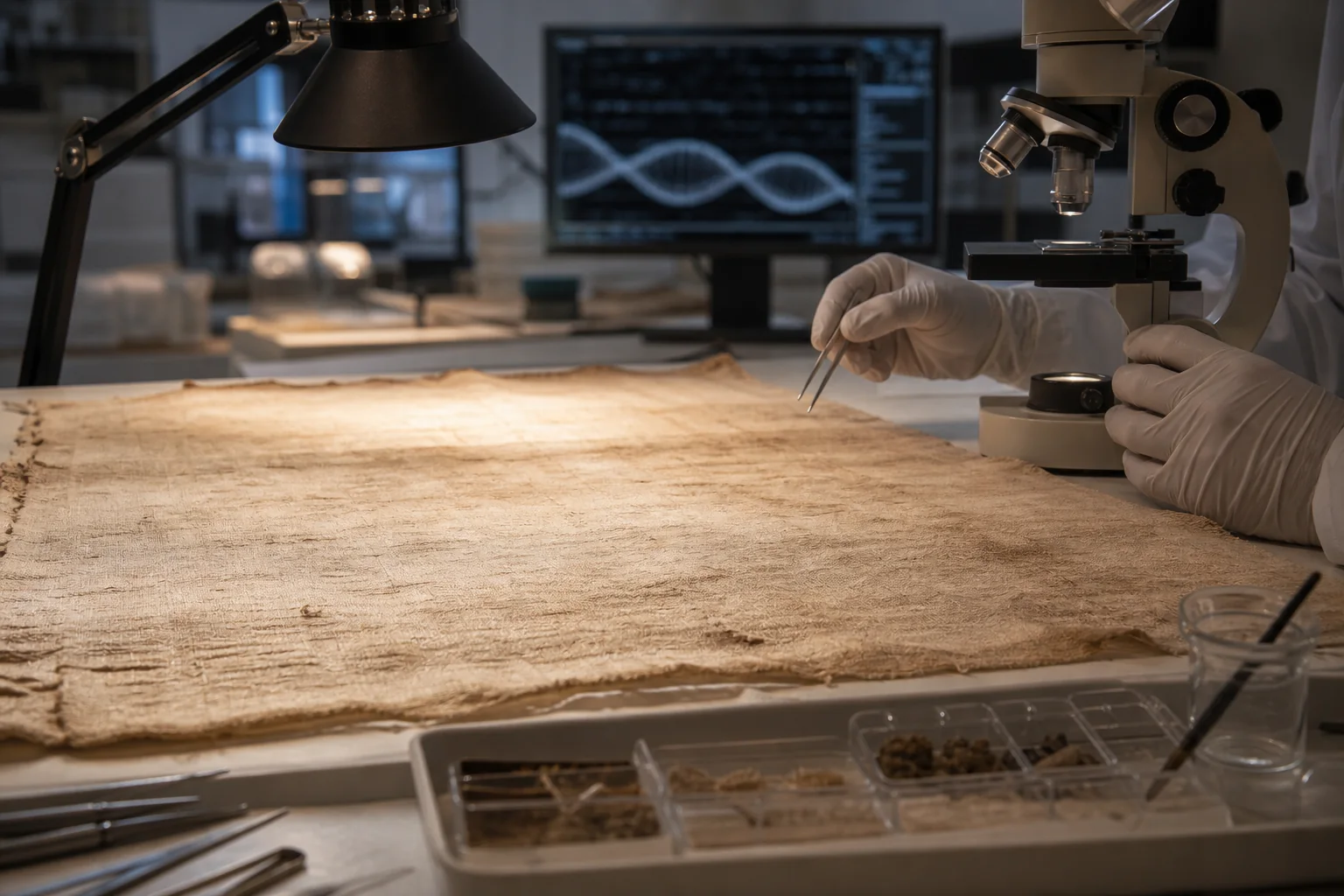
9 min readOriginal interpretive reconstruction created for Druze Bloodline; not an archival photograph.
In brief
Four things to carry forward
A 2015 study recovered plant and human DNA from dust vacuumed from the Turin Shroud.
The authors highlighted H33 as rare and mainly observed among Druze in the data then available.
The cloth also carried many other lineages, consistent with travel, handling, worship, and contamination.
The H33 finding is a real point of contact; establishing when and how it arrived remains the central question.
1. What the laboratory reported
The finding behind the headline
Researchers analyzed dust collected from the Shroud during a 1978 conservation operation. They detected plants associated with several geographic regions and mitochondrial DNA from multiple human haplogroups. One signal, H33, received special notice because the published reference literature then placed it mainly among Druze individuals.
That wording matters. The paper did not declare the Shroud's blood Druze, nor did it isolate a single owner of the cloth. It did place an uncommon lineage associated with a closed Levantine community on an object long linked by tradition to Jesus. For the bloodline thesis, that is an unusually concrete convergence.
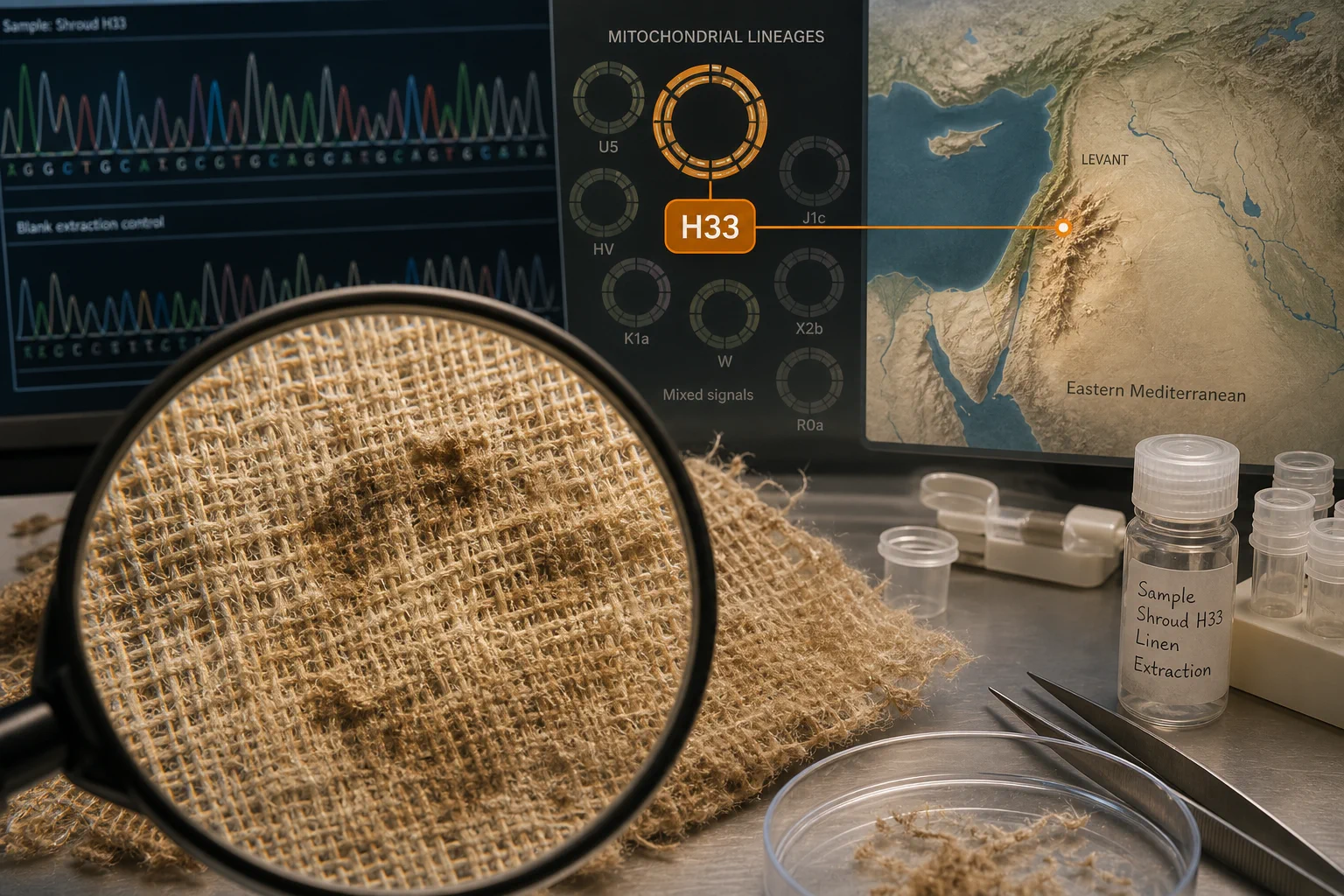
H33 does not finish the argument. It gives the argument a laboratory address.
2. Mixed DNA is part of the history
A cloth with many journeys
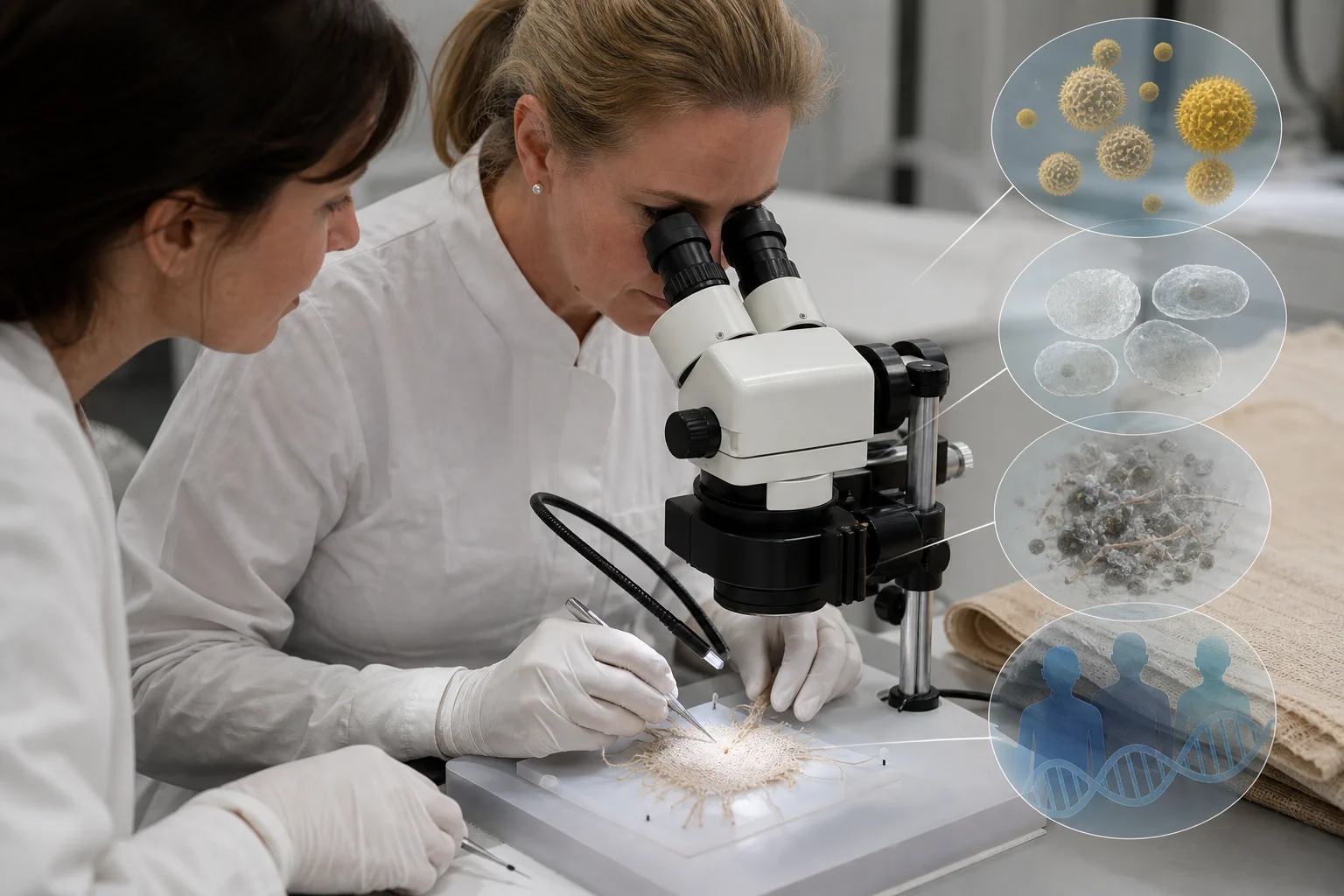
The Shroud has been carried, displayed, repaired, kissed, touched, and sampled. Both the 2015 work and newer analysis recover mixed genetic material. That makes a many-person profile expected rather than disqualifying. The evidentiary challenge is to distinguish an early signal from a later visitor.
A supportive reading therefore asks a sharper question: is H33 distributed in material or locations that point to an old association, or is it confined to surface dust compatible with recent contact? Future spatial sampling, if preservation rules allow it, could move the inquiry beyond presence alone.
3. Provenance before proclamation
The next experiment
A decisive program would compare independently collected Shroud samples, report read depth and damage patterns, use stringent ancient-DNA controls, and test H33 against broad modern and ancient Levantine datasets. It should also publish negative results and sample locations.
Until then, the Druze signal deserves neither dismissal nor inflation. It is a published clue that lands exactly where the lineage thesis predicts a clue might appear: between a Jesus relic tradition and a people proposed to have preserved the line.
Evidence desk
Keep each layer visible
Scientific lead
H33 was reported
Lineage thesis
A predicted point of contact
Interpretive bridge
Date and source
Source notes
Read the underlying record
Uncovering the sources of DNA found on the Turin Shroud
Dust collected from the cloth yielded many plant and human signals. The authors noted that H33 was rare in their reference data and had mainly been observed among Druze populations.
Scientific ReportsThe Turin Shroud: DNA analysis and body fluid characterization
Analysis of official 1978 material found multiple mitochondrial signals and offers a new comparison point for provenance and handling questions.
Scientific ReportsThe Druze: A Population Genetic Refugium of the Near East
A population study describing regional founder effects, diversity, and Near Eastern relationships among sampled Druze communities.
PLOS ONE