
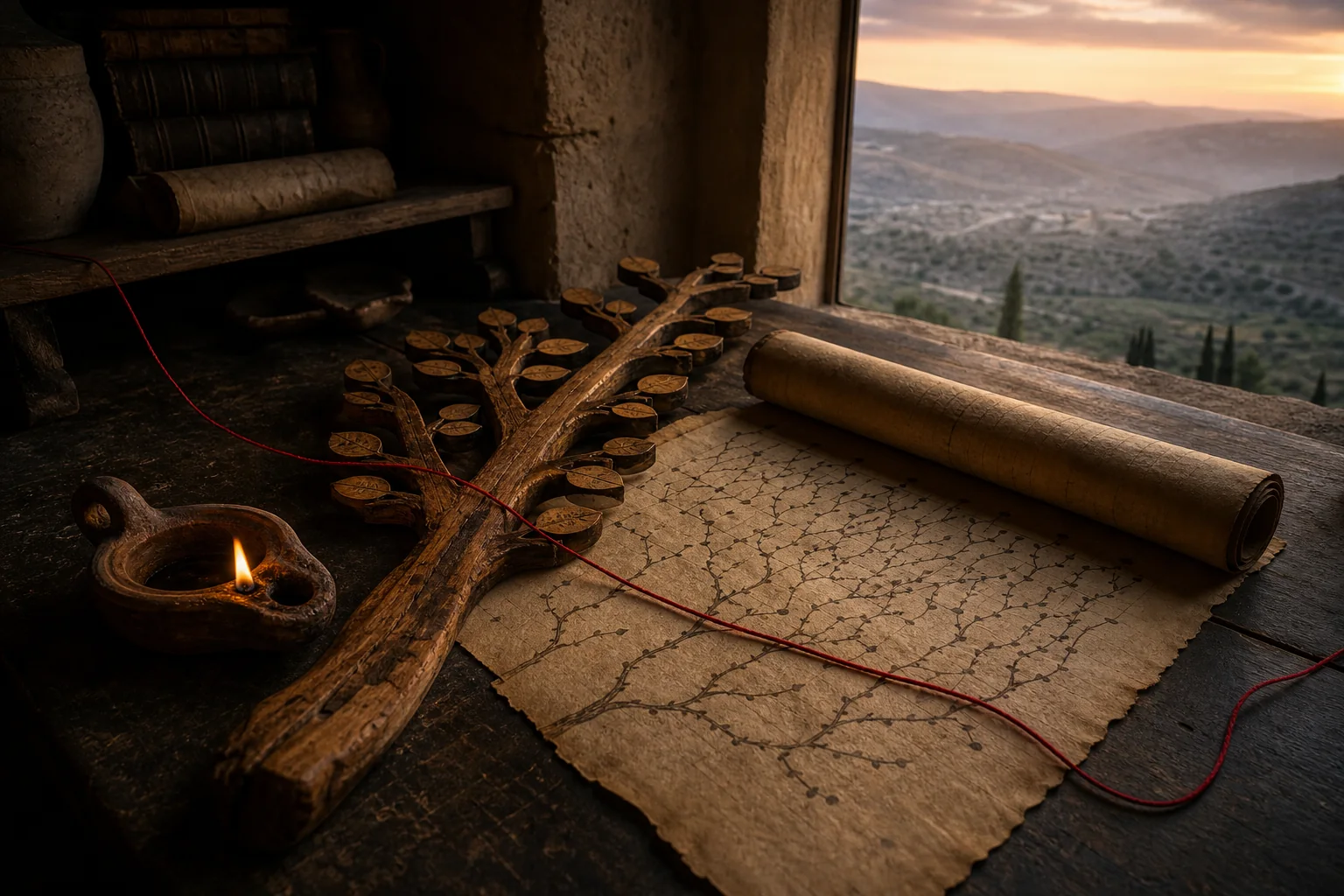
Chapter 06 · Companion · family · transmission
The Jesus Strand
Early Christian texts remember Mary Magdalene as an unusually close companion. The lineage thesis asks whether spiritual transmission and family descent were once the same story.
9 min readOriginal interpretive reconstruction created for Druze Bloodline; not an archival photograph.
In brief
Four things to carry forward
Canonical Gospels place Mary Magdalene at the crucifixion, burial, and first resurrection witness.
The Gospel of Philip calls her Jesus' companion and uses intimate, sacramental language.
Later Grail traditions can be read as stories about holy blood or living descent rather than an object alone.
No surviving early record supplies a complete genealogy, but suppressed family traditions remain a coherent research question.
1. The witness who remains
Mary in the earliest memory
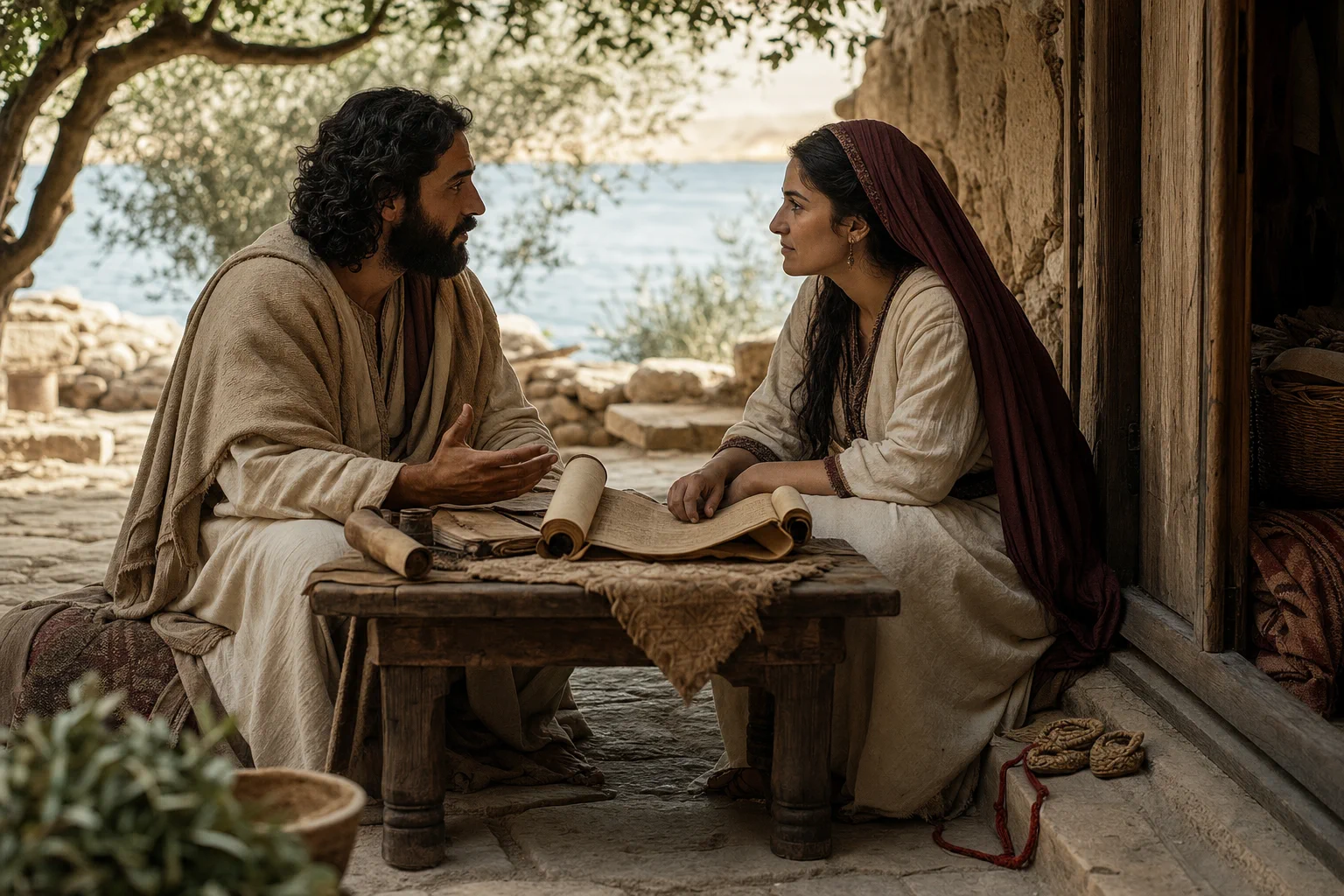
Across the canonical Gospels, Mary Magdalene appears where many disciples do not: at the crucifixion, at the tomb, and as the first witness commissioned to announce resurrection. Those roles give her a foundational authority that later institutional memory often narrowed.
Noncanonical writings widen the portrait. The Gospel of Mary depicts conflict over her privileged teaching; the Gospel of Philip names her as companion and places her within a theology of union. These texts are later than the earliest Christian sources, but they preserve communities in which intimacy, wisdom, and succession were still debated.
2. What ‘Grail’ may encode
From sacred union to living descent
Some theorize that the Holy Grail began not as a jeweled cup but as a vessel of lineage: sang real, royal blood, a family carrying sacred descent through danger. Medieval Grail literature does not provide a transparent family registry, yet its recurring motifs—hidden heirs, wounded kings, guarded vessels, and restored lands—invite a genealogical reading.
In this model, flight from Roman and later ecclesiastical pressure could produce more than one refuge. Western traditions emphasize Gaul and dynastic houses; the Druze thesis looks east and south, toward Levantine families and mountain sanctuaries closer to the original landscape. The two routes need not be mutually exclusive.
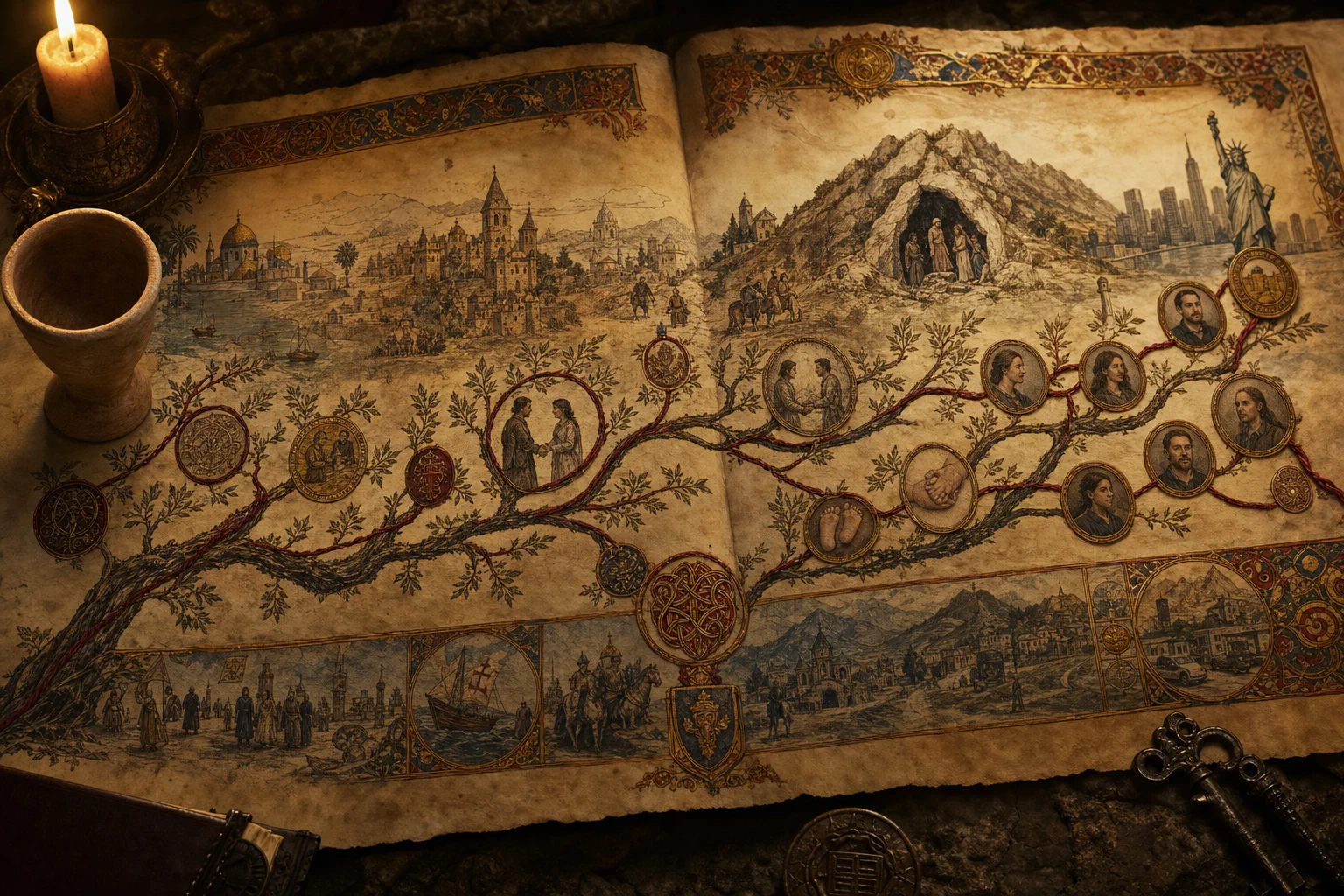
A vessel can be made of metal. It can also be a community.
3. Recovering a broken chain
What would count as evidence
A complete proof would require documents that rarely survive persecution: early family records, stable names across languages, graves with secure provenance, or a genetic relationship between independently authenticated remains and living lines. Each category is difficult, but none is conceptually impossible.
Meanwhile, the textual pattern matters. Mary Magdalene's authority is early; intimate companion traditions are ancient; sacred-family interpretations recur; and a closed Levantine community demonstrably preserved identity near the source geography. Together they form a case for continued investigation rather than a finished pedigree.
Evidence desk
Keep each layer visible
Textual thread
Mary as first witness and companion
Lineage thesis
The Grail as living blood
Interpretive bridge
No continuous pedigree survives
Source notes
Read the underlying record
The Gospel of Philip
An English translation of the Nag Hammadi work whose language about Mary Magdalene as companion became important to later sacred-lineage readings.
The Gnostic Society LibraryThe Gospel of Philip and early claims about Jesus' marital status
Karen King's study situates the Gospel of Philip within early Christian arguments about marriage and how Jesus was remembered.
Cambridge University PressJesus Strand
A complementary presentation of the identity parallels, names, dates, and family connections that make up the lineage argument.
Tap Into The Truth