
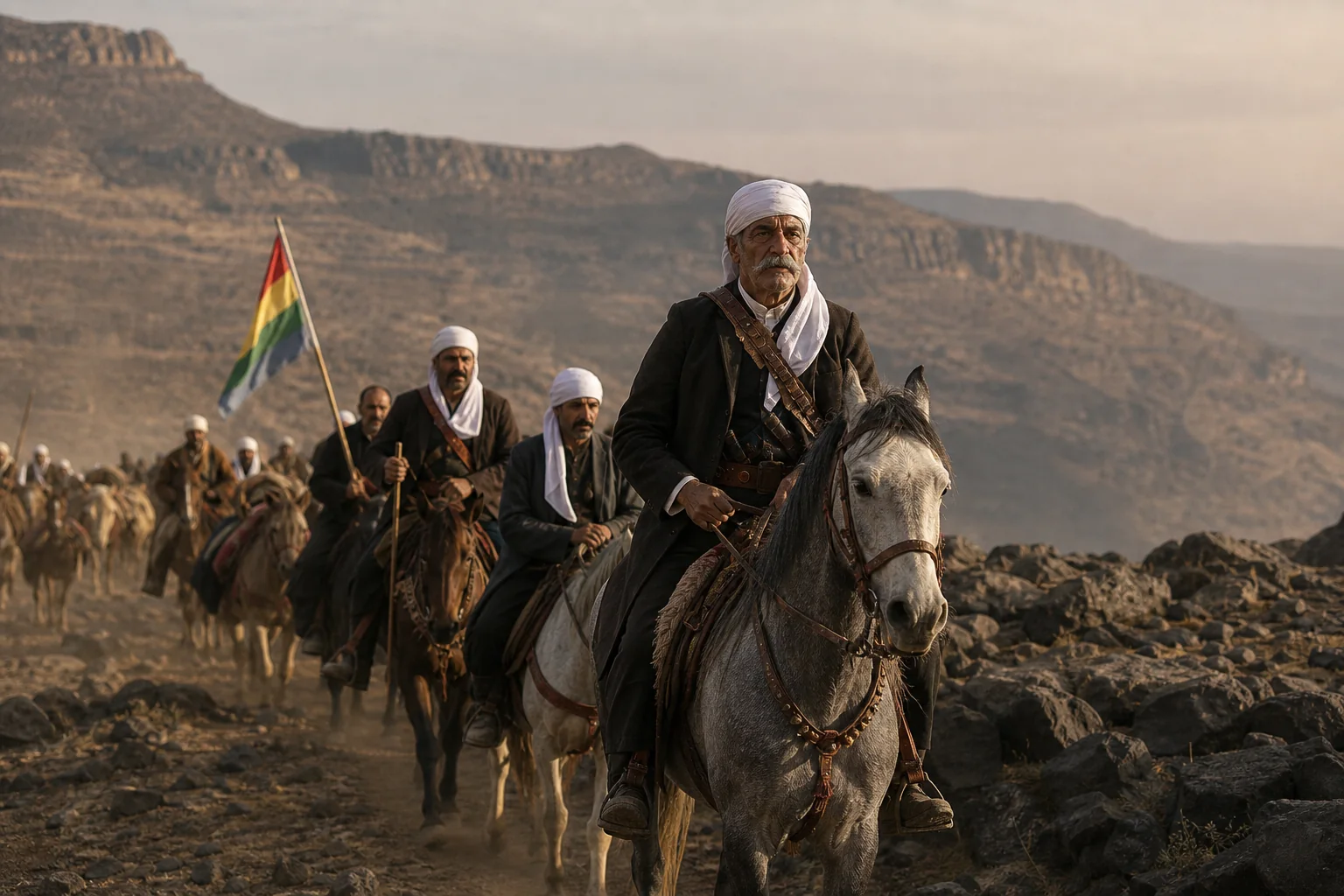
Chapter 10 · Sultan al-Atrash · 1925
Resistance as inheritance
Sultan al-Atrash and the Great Syrian Revolt reveal a recurring Druze role: local loyalty expanding into a broader defense of dignity, land, and self-rule.
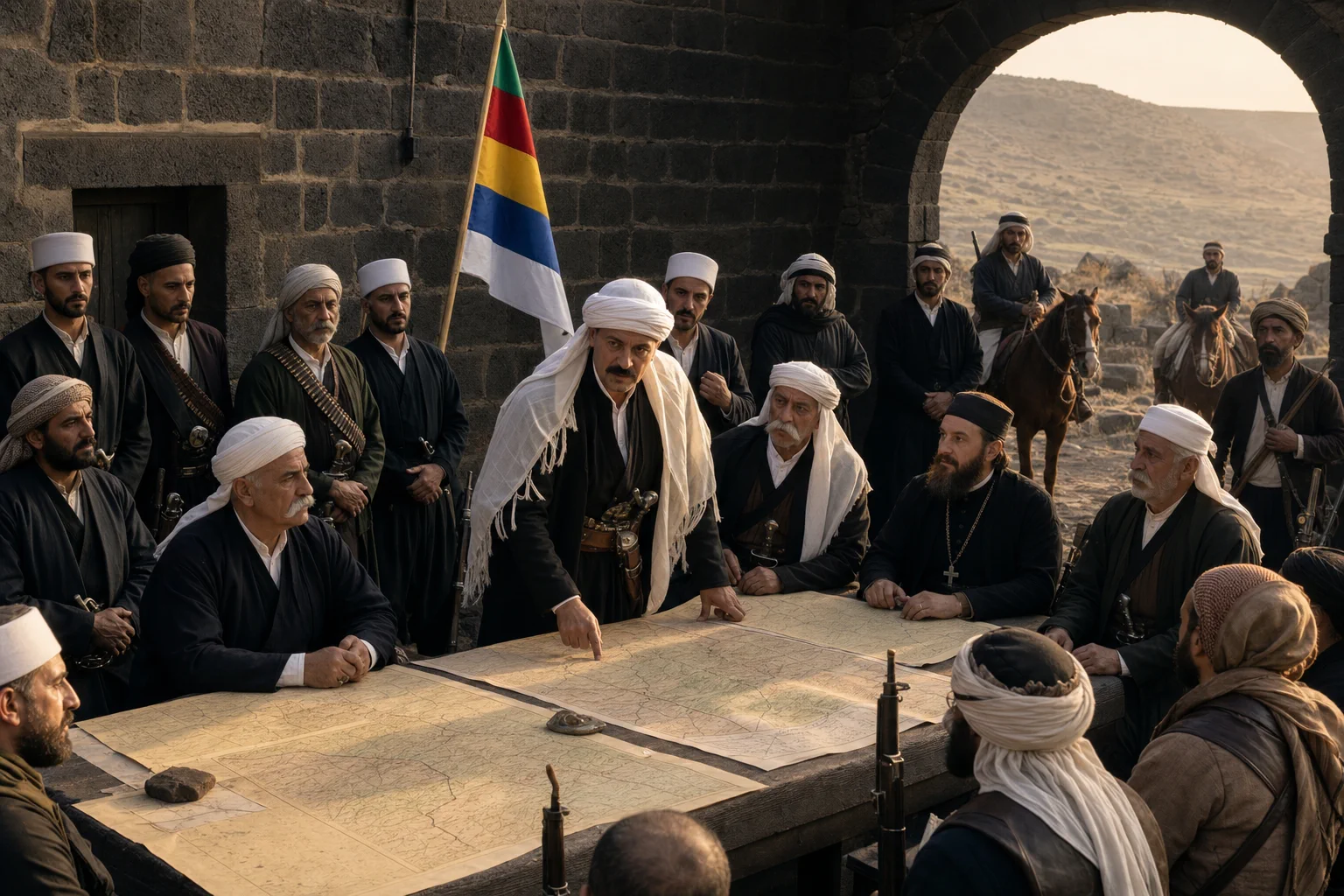
8 min readOriginal interpretive reconstruction created for Druze Bloodline; not an archival photograph.
In brief
Four things to carry forward
The 1925 uprising began in Jabal al-Druze and expanded into a wider Syrian revolt against the French Mandate.
Sultan al-Atrash became a durable symbol of resistance and cross-community independence.
The Druze record of survival combines refuge with moments of decisive public action.
The bloodline thesis reads repeated resistance leadership as the social function of a guarded inheritance.
1. The uprising of 1925
From mountain grievance to national revolt
French mandate pressure on Jabal al-Druze turned arrests and local grievances into open revolt. Under Sultan al-Atrash, Druze fighters won early engagements and issued a call that reached beyond sect or region. Damascus, Ghouta, and other communities joined a struggle remembered as the Great Syrian Revolt.
The movement was militarily suppressed, but its political meaning endured. It demonstrated how a compact mountain society could preserve enough cohesion to challenge a modern colonial state, then articulate the struggle in a broader national language.
2. Memory in public stone
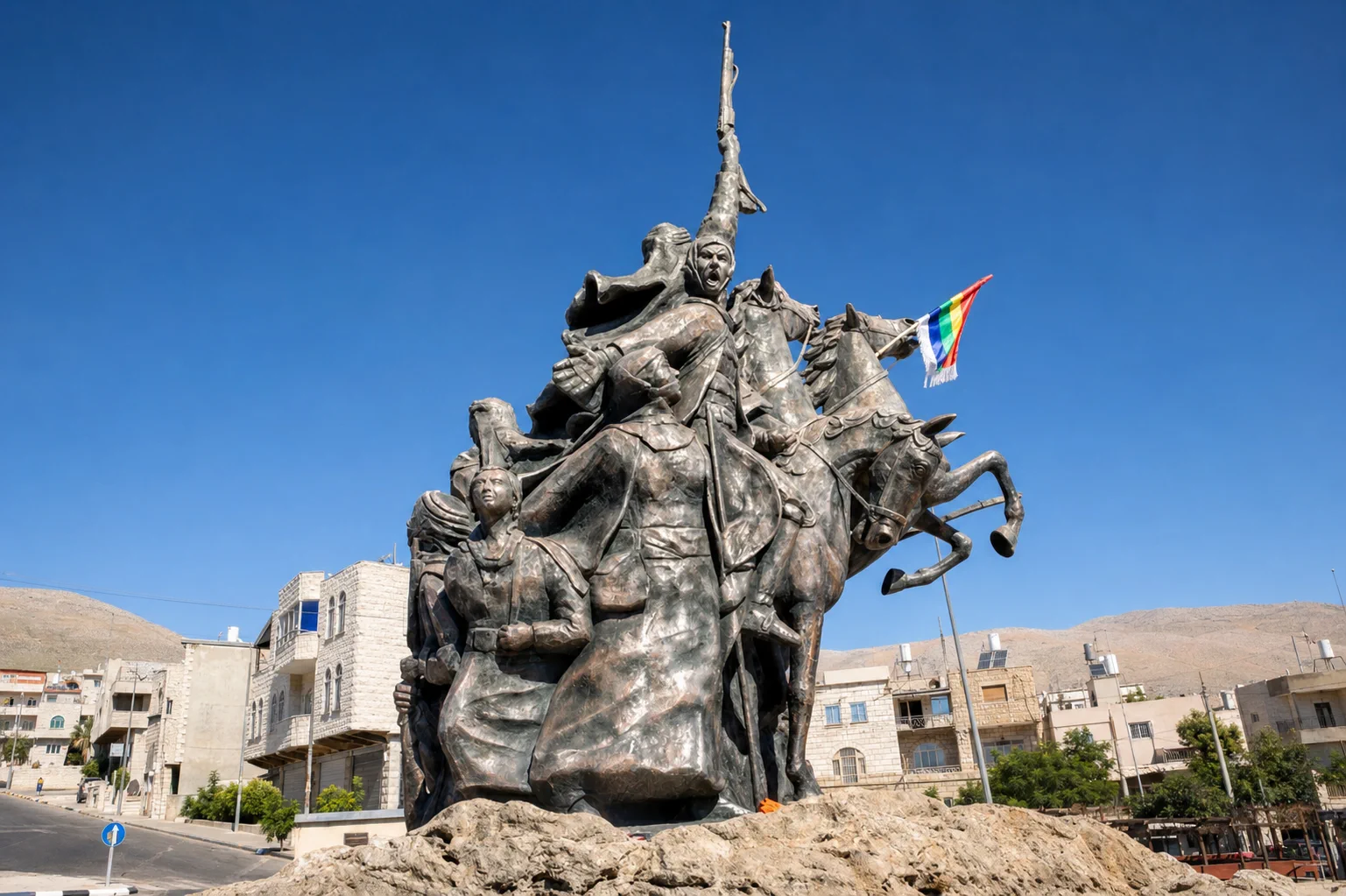
The monument at Majdal Shams
The monument to Sultan al-Atrash at Majdal Shams presents a standing figure above riders breaking forward through stone. It is not a generic warrior statue. Its composition joins individual moral authority to a people in motion, while the nearby five-color flag identifies the community whose memory carries it.
Monuments can simplify, yet they also reveal what a community chooses to preserve. Here the preserved values are refusal of domination, courage under imbalance, and leadership accountable to collective dignity. Those values resonate strongly with the lineage thesis even without a hidden genealogy.
A lineage survives not only through birth, but through the duties each generation agrees to inherit.
3. Function across changing names
The recurring protector pattern
Across the broader lineage map, certain figures recur as emancipators, unifiers, or protectors under pressure. Abraham Lincoln, Omar al-Mukhtar, Sultan al-Atrash, and later political families are read not as identical biographies but as expressions of a repeating office: preserve the people, oppose bondage, and restore lawful order.
Historical parallels do not establish shared blood. They can, however, reveal a cultural function through which a line recognizes itself. The strongest version of the thesis will connect function to family records; until then, the documented Druze resistance tradition remains substantial evidence of the pattern's living half.
Evidence desk
Keep each layer visible
Historical thread
The revolt and its leadership
Lineage thesis
The protector function
Interpretive bridge
Parallel is not pedigree
Source notes
Read the underlying record
Rebels and Rivals in a Syrian Town
An open-access study of the 1925 revolt, its Druze beginnings, cross-community expansion, diaspora, and later memory.
International Journal of Middle East StudiesSyria: A Country Study
A broad historical reference covering Jabal al-Druze and the revolt led by Sultan al-Atrash.
Library of CongressDruze Heritage: Foundation, Community, and Culture
A community and scholarly symposium on a thousand years of Druze history, memory, and global continuity.
Library of Congress