
Chapter 11 · The line in the present
A living people, not a relic
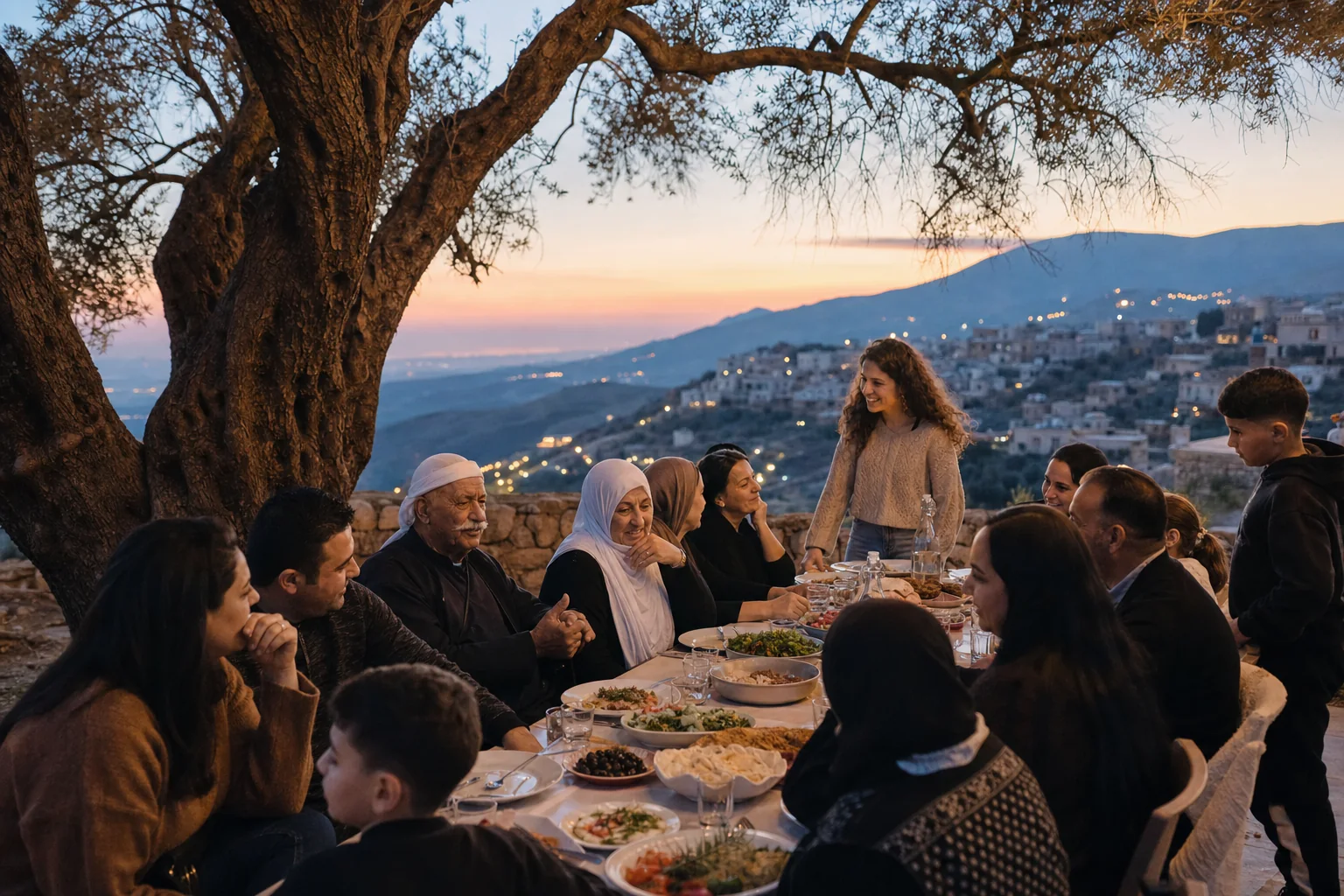
The strongest evidence of Druze continuity is visible now: families, elders, villages, diaspora networks, and a guarded ethical tradition adapting without disappearing.
8 min readOriginal interpretive reconstruction created for Druze Bloodline; not an archival photograph.
In brief
Four things to carry forward
Druze communities live across Lebanon, Syria, Israel, Jordan, and a global diaspora.
Traditional dress among religious elders remains a visible sign of office, discipline, and continuity.
Modern education and diaspora life change the form of community without necessarily dissolving its memory.
Any bloodline inquiry must remain accountable to living Druze voices, privacy, and internal diversity.
1. Tradition made visible
The uqqāl in the modern world
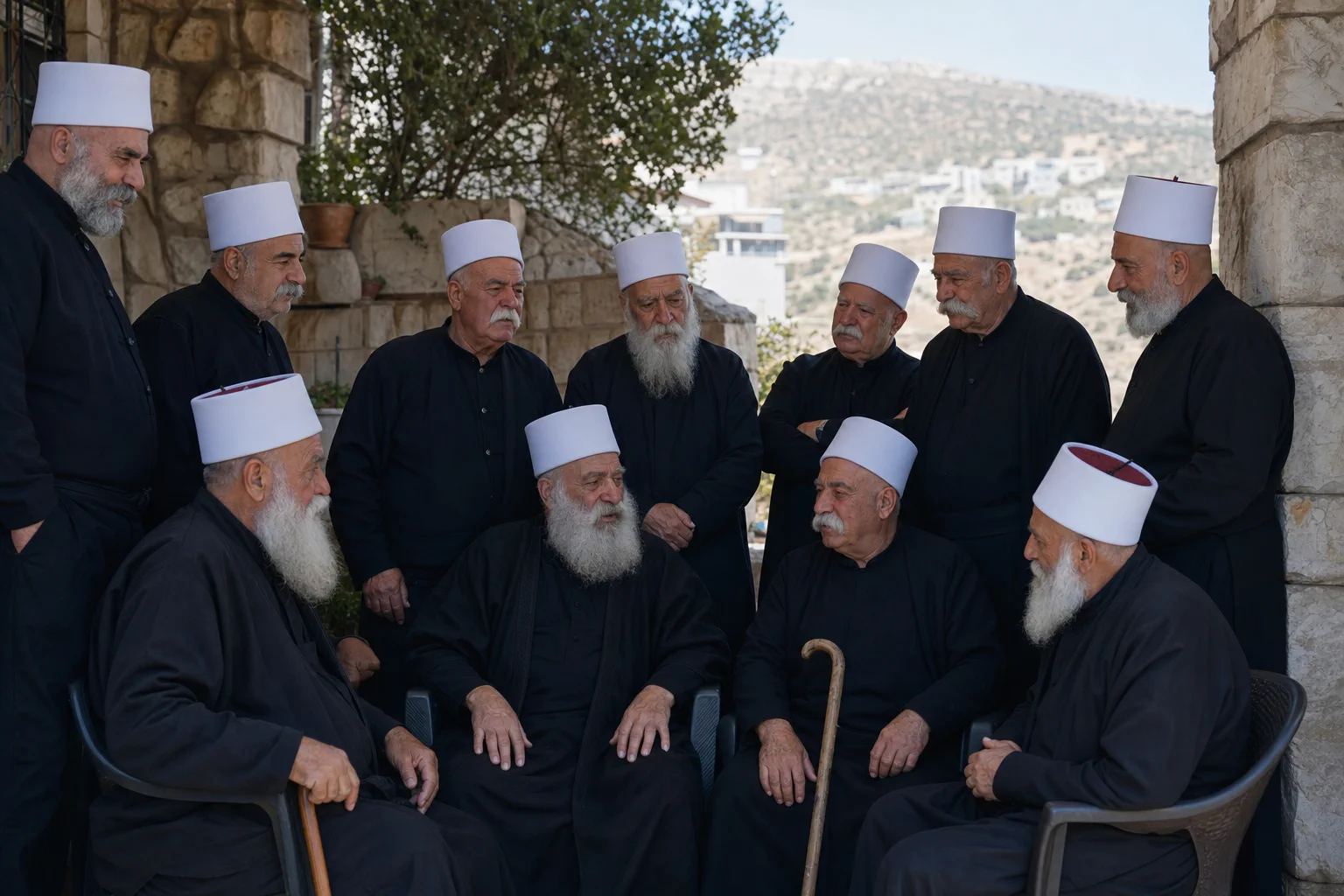
In Druze towns today, initiated elders may still be recognized by black robes and the white cylindrical laffa, sometimes wrapped over a red cap. The clothing is not costume. It marks a chosen discipline of conduct, study, restraint, and service within a modern community.
This visible continuity matters because it resists the assumption that guarded traditions belong only to the distant past. Smartphones, universities, professions, and migration coexist with kinship, shrines, councils, and inherited ethical roles. A living vessel can change its exterior while preserving its center.
2. The diaspora as a second mountain
Family memory across borders
Druze families now maintain communities far beyond the Levant. Foundations, youth organizations, cultural gatherings, oral histories, and digital networks help transmit identity when the protective geography is no longer a literal mountain.
Diaspora can weaken endogamous boundaries, but it can also surface archives once held in private houses: photographs, letters, immigration records, family Bibles, land documents, and names transliterated in several ways. Those materials may be crucial to testing later branches of the bloodline thesis.
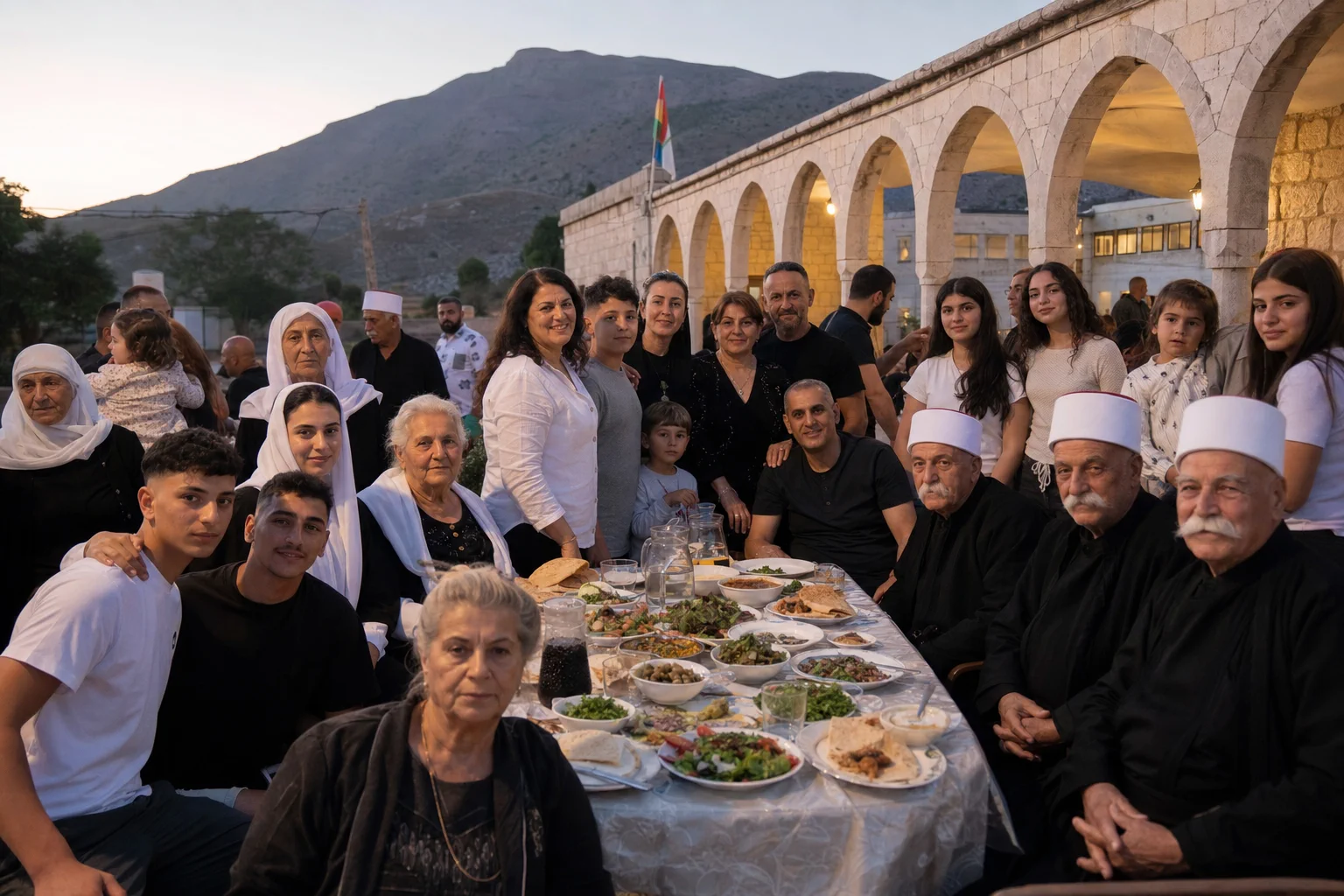
A mountain protects by distance. A diaspora protects by connection.
3. The ethical foundation
Research with, not merely about
A lineage project can become extractive if it treats living people as specimens or assigns them a collective secret. The better path is community-led: invite Druze historians, genealogists, elders, and families to identify errors, translate names, open records by consent, and define what should remain private.
The theory is most compelling when it honors the people it places at the center. Whatever future documents or DNA reveal, the demonstrated inheritance is already profound—a community that carried unity, memory, and mutual obligation through a thousand difficult years.
Evidence desk
Keep each layer visible
Historical thread
Living continuity
Lineage thesis
The refuge still lives
Research principle
Consent protects the line
Source notes
Read the underlying record
About the Druze
A community account of Druze history, values, and the five colors: green, red, yellow, blue, and white.
American Druze FoundationDruze Heritage: Foundation, Community, and Culture
A community and scholarly symposium on a thousand years of Druze history, memory, and global continuity.
Library of CongressReconstructing Druze population history
Genome-wide analysis identifying a long period of reduced population size followed by regional isolation and distinctive founder histories.
Scientific Reports / PMC