
Chapter 01 · The living-line thesis
The Druze and the living line
Begin with the documented Druze story, then follow the bolder proposition: that a sacred family line survived by becoming a disciplined mountain community.
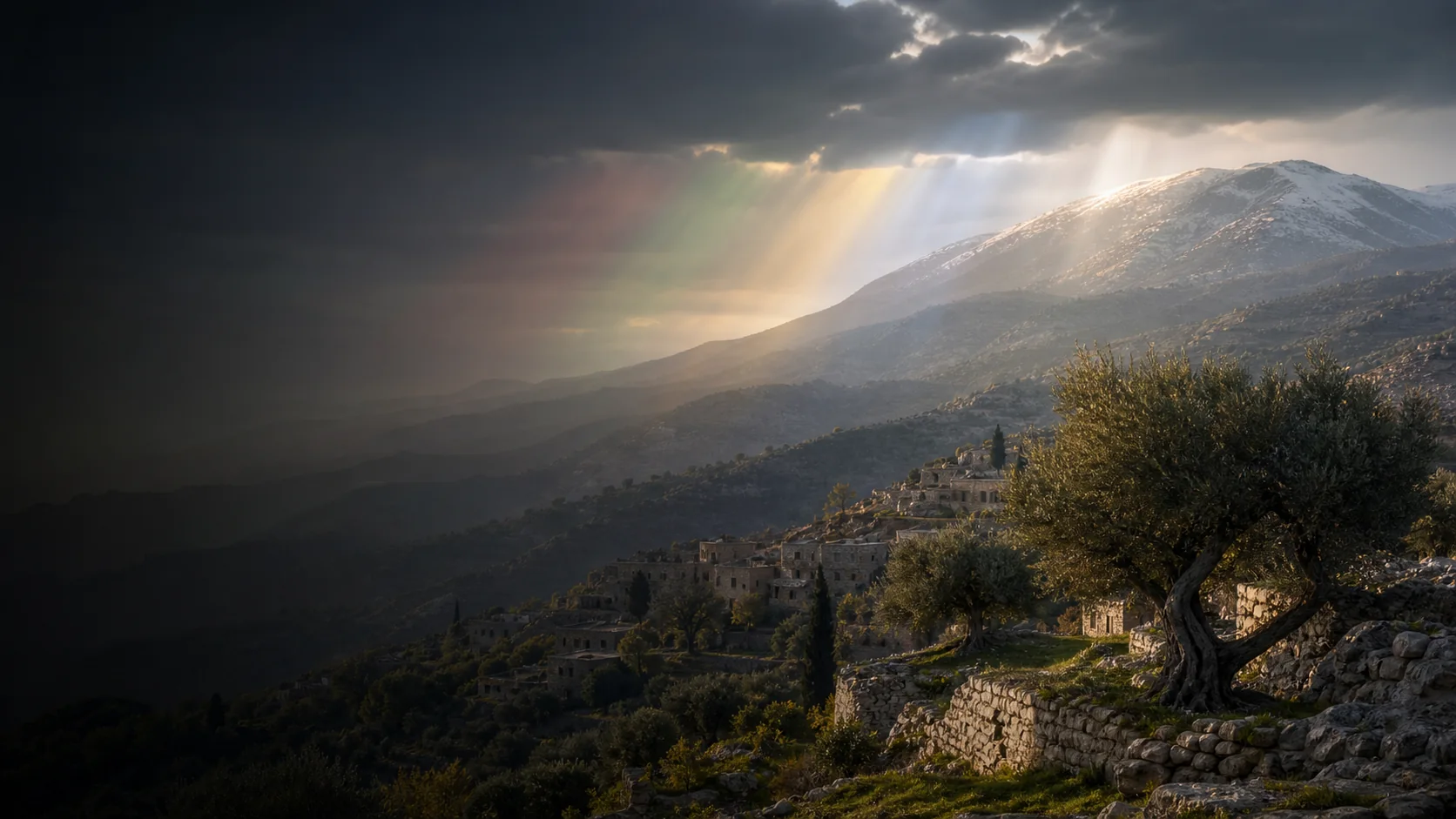
8 min readOriginal interpretive reconstruction created for Druze Bloodline; not an archival photograph.
In brief
Four things to carry forward
The Druze emerged from the Fatimid intellectual world in the early eleventh century and endured as a distinct Levantine community.
Closure to conversion, mountain refuge, endogamy, and family memory created unusual conditions for continuity.
The bloodline thesis interprets that continuity as intentional guardianship of a sacred ancestral strand.
History, genetics, texts, symbols, and identity parallels form separate clues whose convergence is the central inquiry.
1. A people with a thousand-year record
The history beneath the theory
The documented account begins in Fatimid Cairo around 1017, where Hamza ibn Ali and other teachers proclaimed a radical theology of divine unity, or Tawhid. The call soon closed to new adherents. Communities that accepted it became concentrated in Mount Lebanon, the Galilee, Mount Hermon, and Jabal al-Druze, maintaining identity through local leadership, kinship, and disciplined reserve.
That history alone is remarkable. A small community survived Crusader states, Mamluk and Ottoman power, European intervention, mandates, war, migration, and modern borders. The Druze did not simply preserve a name; they preserved social memory, distinctive marriage networks, sacred writings, and a geography of refuge.
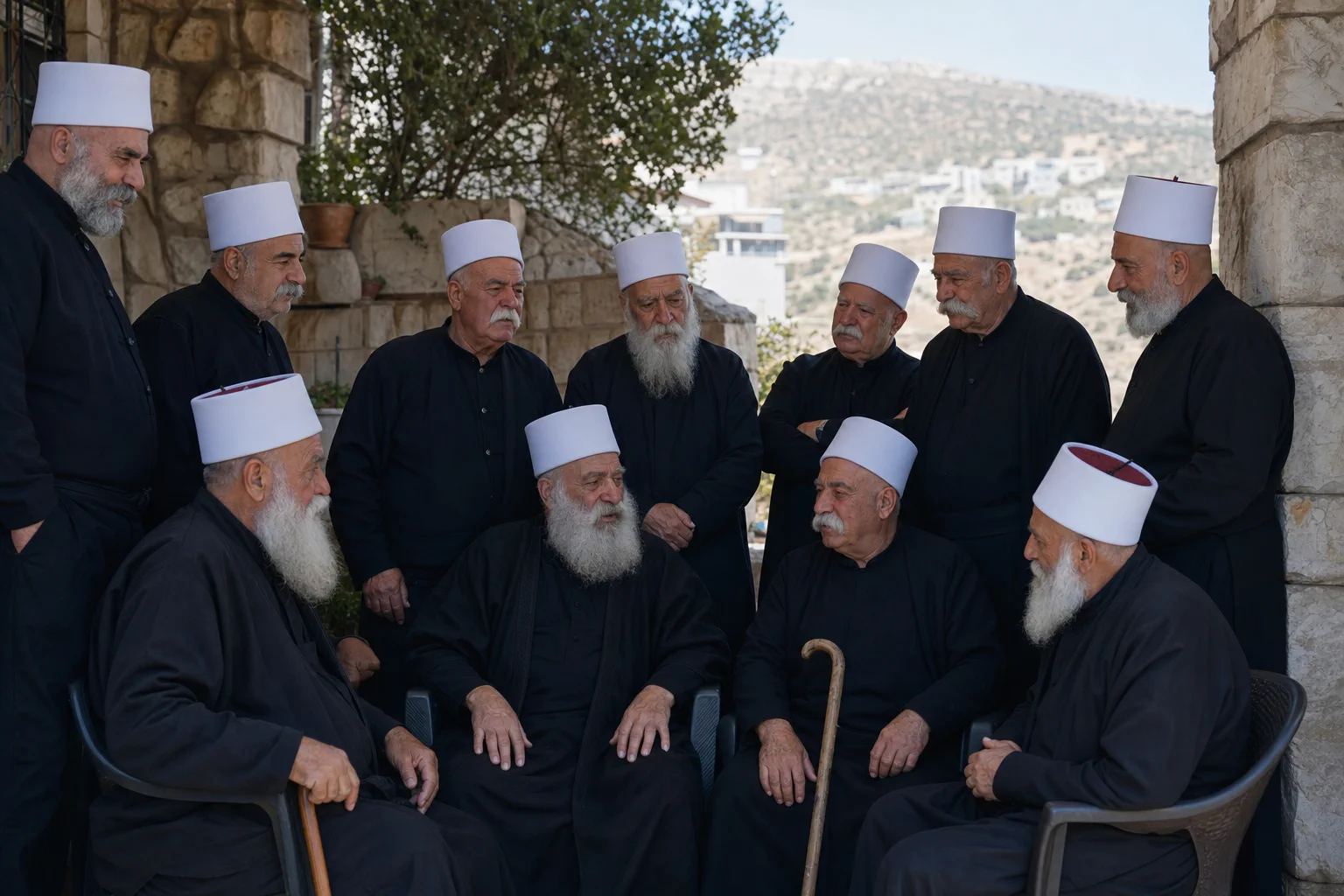
Continuity is not an abstraction here. It is a social achievement repeated across centuries.
2. From survival to guardianship
Where the bloodline thesis begins
The larger thesis asks whether this continuity served more than communal survival. Some theorize that the closed call, protected family networks, and mountain strongholds formed a vessel for an older sacred lineage—one associated with Jesus, Mary Magdalene, and the transmission of wisdom through families rather than institutions.
Read this way, secrecy is not evidence of menace but a survival technology. Public identities may change under danger while relationships, inherited traits, and symbolic language persist. The thesis therefore looks for convergence: a plausible route through the Levant, recurring family patterns, genetic continuity, old texts that elevate hidden knowledge, and later identities that appear to echo one another.
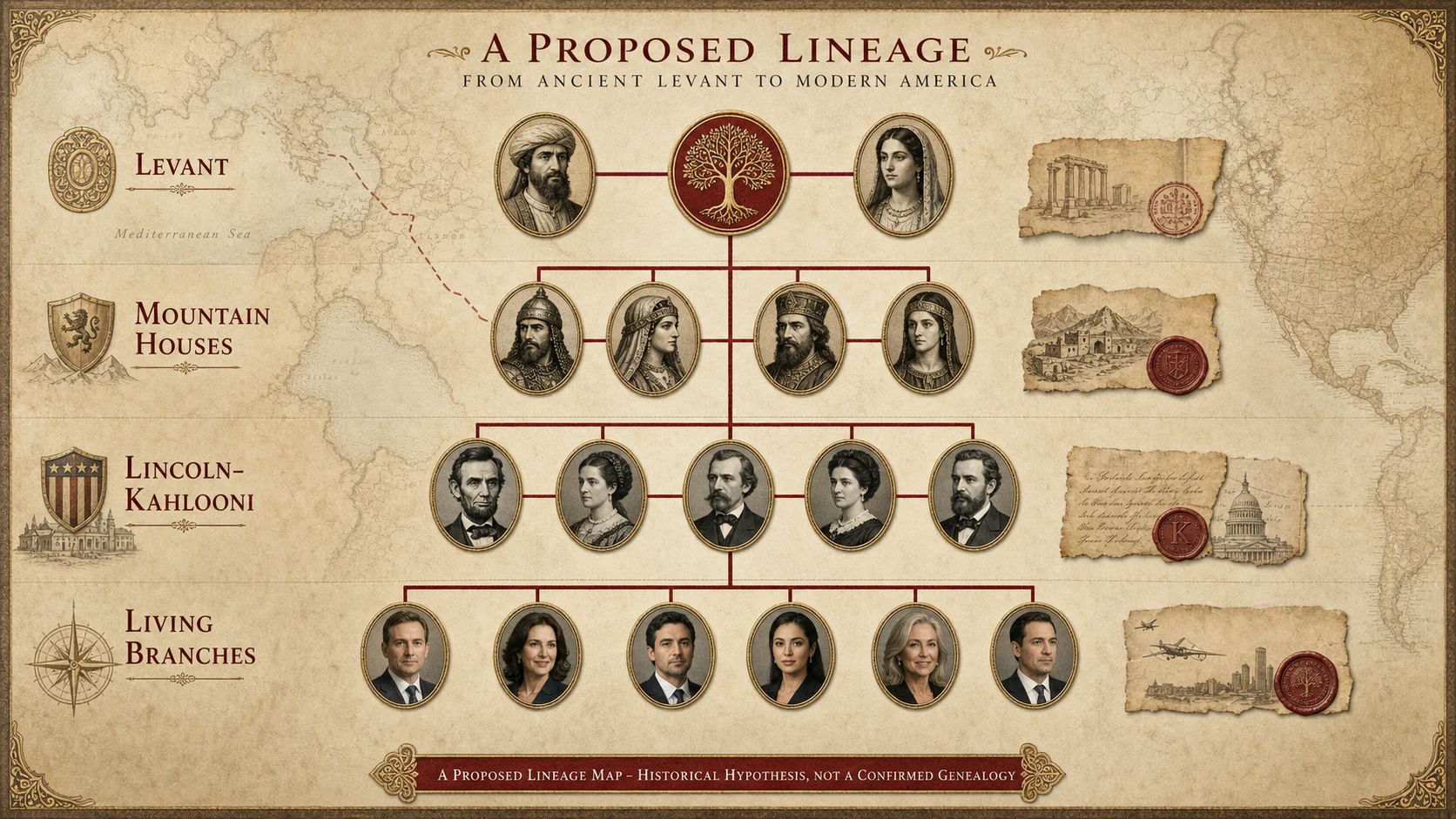
The proposal is not that every Druze person carries one ancestry, but that the community may have sheltered a line history failed to name.
3. Support without overclaiming
A disciplined way to follow it
A strong alternative history grows through testable detail. This project marks what belongs to the lineage thesis, what is fixed by historical records, what published science actually reports, and where an interpretive bridge remains. Those distinctions protect the strongest clues from being weakened by claims they cannot yet carry.
The chapters ahead begin with Cairo and Mount Hermon, move through genetics and Shroud DNA, examine early Christian lineage traditions, open the Lincoln–Kahlooni file, explore symbolic number systems and Tartaria, and end with resistance and living Druze continuity. The aim is cumulative: no single clue bears the entire argument.
Evidence desk
Keep each layer visible
Historical thread
A durable community
Lineage thesis
A guarded ancestral strand
Interpretive bridge
Purpose is harder to prove than continuity
Source notes
Read the underlying record
About the Druze
A community account of Druze history, values, and the five colors: green, red, yellow, blue, and white.
American Druze FoundationDruze Heritage: Foundation, Community, and Culture
A community and scholarly symposium on a thousand years of Druze history, memory, and global continuity.
Library of CongressFatimids
Background on the Fatimid intellectual and political world in which the Druze call emerged.
Encyclopaedia IranicaThe Lincoln–Kahlooni Druze Minority Bloodline: The Jesus Strand
The principal public chart of the proposed Druze, Kahlooni, Lincoln, Mukhtar, and Kennedy relationships. It is read here as a map of the thesis and a guide for further archival work.
Humorous Mathematics